Miami-Dade property guide
Mold Inspection vs. Mold Testing: What’s the Difference?
Understand how visual inspection and laboratory testing work together—and what is included when you book a mold assessment with Miami Mold Assessment.
On This Page
Quick Answer
Mold inspection evaluates the property’s visible conditions and moisture concerns. Mold testing analyzes samples collected from air or surfaces.
At Miami Mold Assessment, these are parts of one mold assessment, not two separate services you need to purchase. Our assessment combines visual evaluation, moisture meter readings, both air and swab sampling, laboratory analysis, a full report and a written remediation protocol.
Residential assessments start at $389 with three samples included, including an outdoor comparison sample. Additional samples are $75 each.
What Is a Mold Inspection?
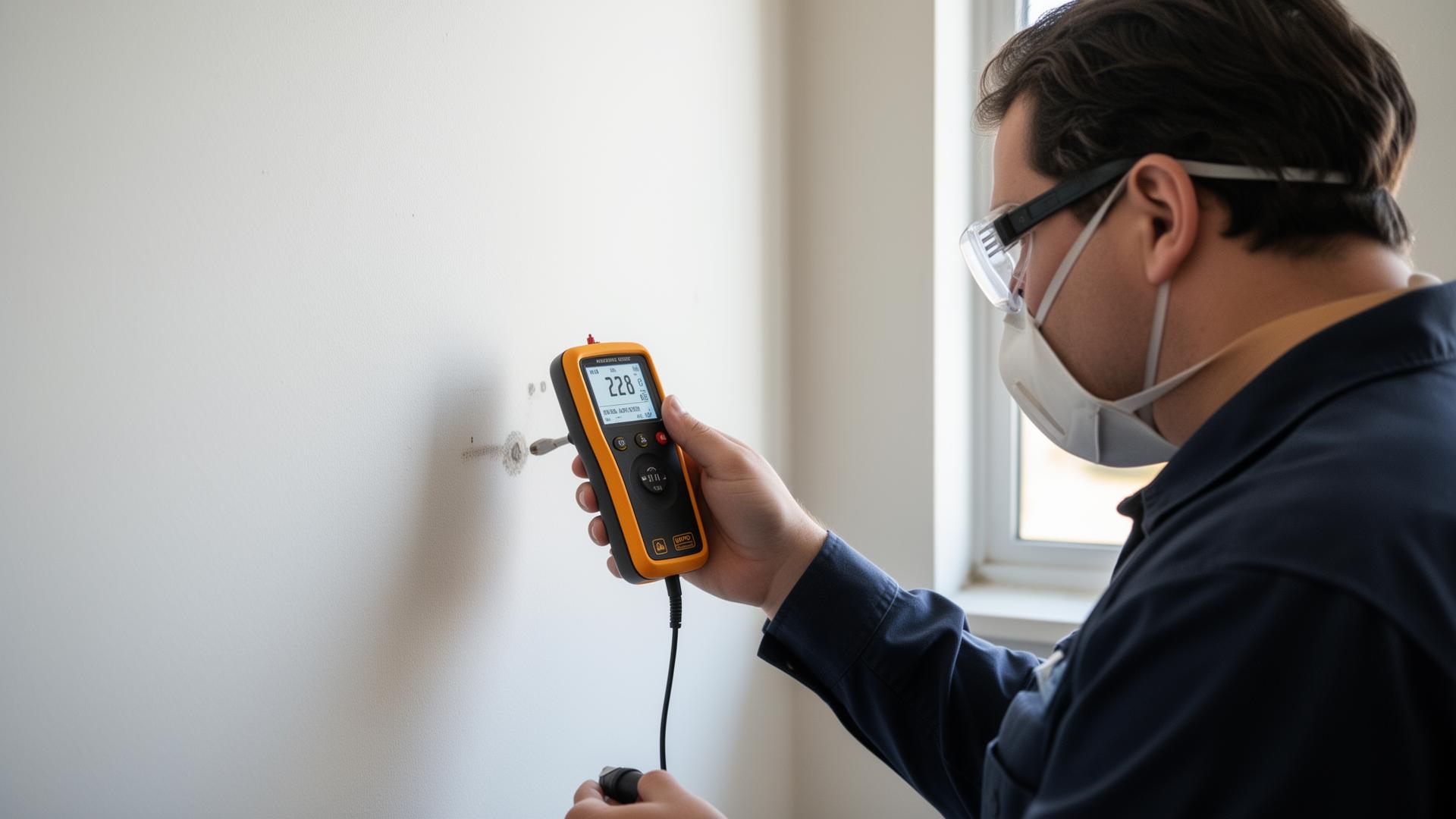
A mold inspection is the evaluation of accessible areas for visible growth, water damage, odors and moisture concerns.
During our assessment, we discuss the property history, examine the agreed areas of concern and take moisture meter readings. Tell us about past leaks, repairs, recurring dampness or areas that were recently painted or covered.
What can a visual inspection establish?
It can document what is visible and help identify where further investigation or sampling is appropriate. A moisture reading adds information about the material tested; it does not identify mold by itself.
Accessible areas and concealed spaces are different. Walls, flooring, cabinets or other finishes may limit what can be observed without additional investigation.
For the broader service, read what a professional mold assessment includes.
What Is Mold Testing?
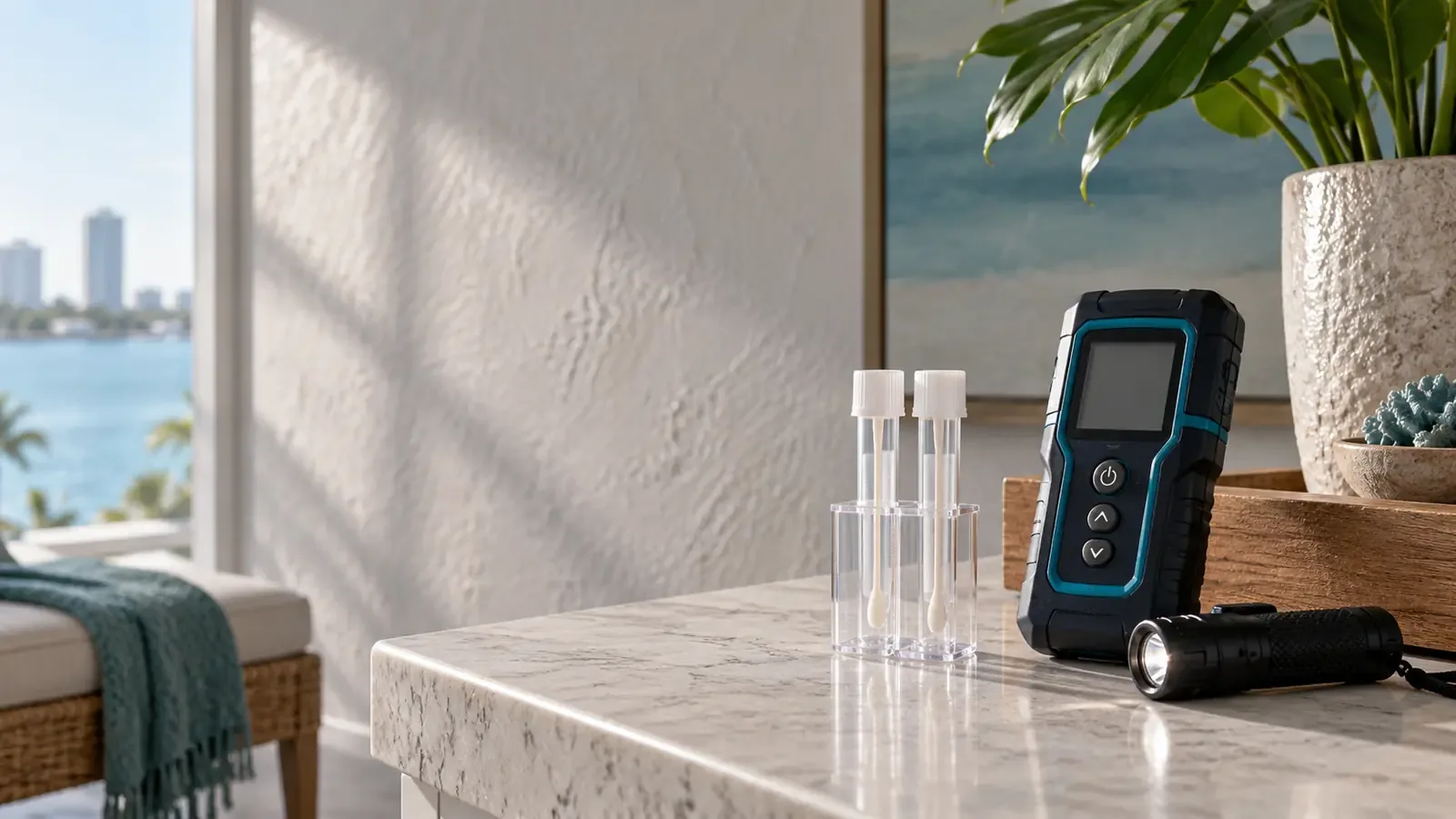
Mold testing involves collecting samples and sending them to a laboratory for analysis. Our residential assessment includes both air and swab sampling.
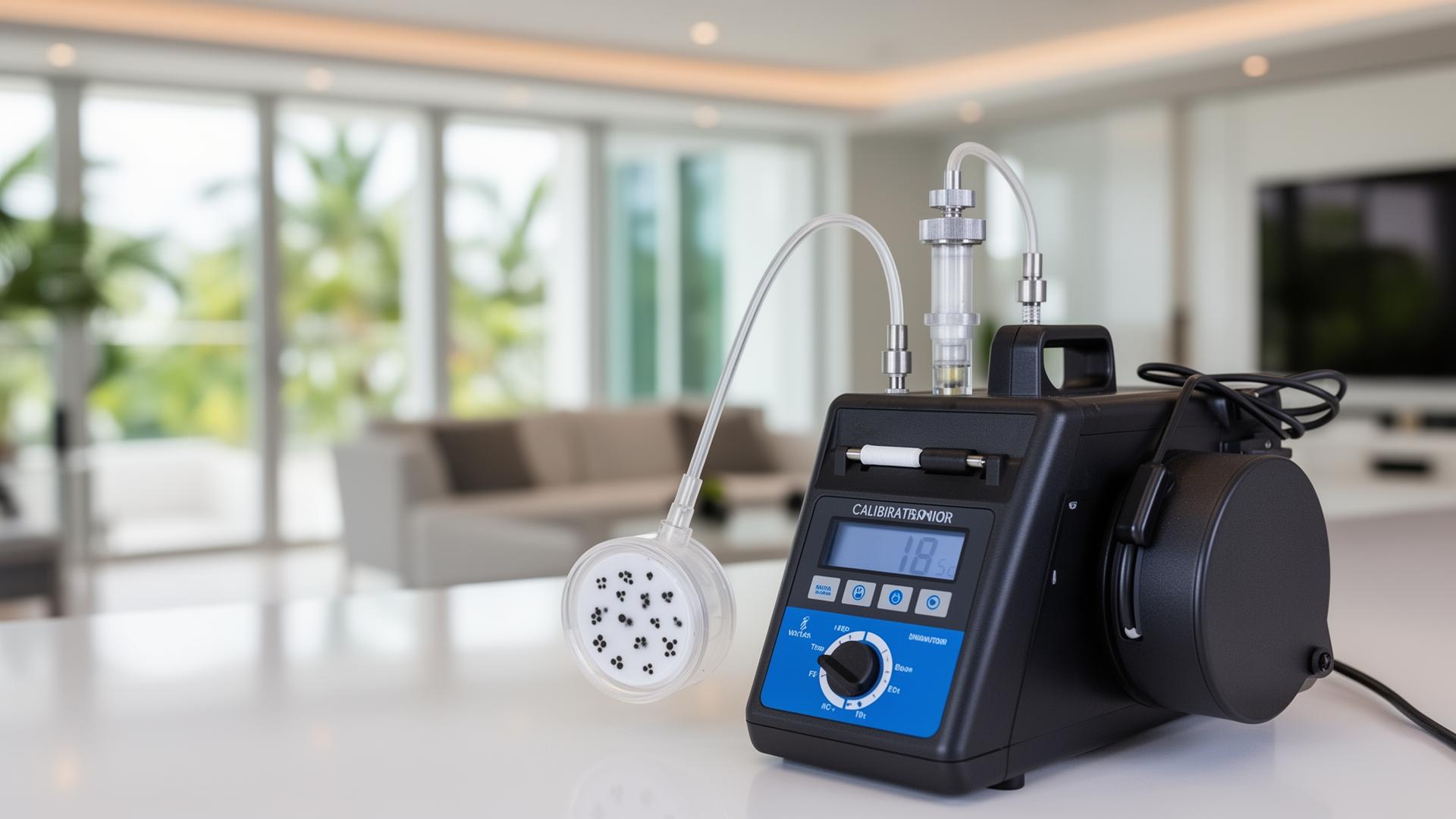
Air samples provide information about mold particles collected at a particular location and time. An outdoor comparison sample provides context for interpreting the indoor findings.
Swab samples collect material from a selected surface. The results relate to that sampled location, rather than every surface in the room.
The sampling plan should address the property’s concerns. The EPA recommends using professionals experienced in planning sampling, collecting samples and interpreting the results. EPA: Mold Testing or Sampling.
For the collection steps, see how mold testing is done.
How Do Inspection and Testing Work Together?
Inspection helps establish the context and guide sample selection. Testing adds laboratory information. The assessor brings those findings together in the report and remediation protocol.
| Part of the assessment | What it contributes |
|---|---|
| Property history and visual inspection | Observations about accessible conditions, previous leaks and areas of concern. |
| Moisture meter readings | Information about moisture conditions in the materials evaluated. |
| Air and swab testing | Laboratory findings from the locations sampled. |
| Full report | An explanation of the findings, sampling locations and limitations. |
| Remediation protocol | Written guidance for addressing the affected conditions and planning remediation. |
You book one assessment with us. We confirm the scope and price before the visit, so you know which areas and samples are included.
A typical three-sample residential assessment takes 30–60 minutes on site. Laboratory results and the completed report usually return within 24–48 hours after the visit.
What Can Mold Inspection and Testing Results Tell You?
Together, the findings help explain the conditions evaluated and support recommendations for the next steps.
The report should connect the laboratory findings with the visual observations, moisture readings and property history. A number on a laboratory sheet should not be treated as a complete explanation of the property.
What are the limits?
- A sample represents the location and conditions sampled.
- A surface result does not establish airborne conditions throughout the property.
- An air sample does not rule out every concealed area of growth.
- Visual findings are limited by access and what can be observed.
- The findings do not diagnose an occupant’s medical condition.
The EPA has not established federal limits for airborne mold concentrations. Results therefore should not be presented as a federal pass-or-fail certification. EPA: Mold Testing Standards.
See what a mold assessment report includes for more detail about the written deliverables.
What Does a Combined Mold Assessment Cost in Miami?
Our minimum residential assessment package is $389 and includes three samples, including an outdoor comparison sample. Additional samples cost $75 each.
The package includes:
- Visual assessment of the agreed areas of concern.
- Moisture meter readings.
- Both air and swab sampling.
- Laboratory analysis.
- A full report and remediation protocol.
Pricing is based on the package and additional samples—not a per-room fee. We discuss the property and sampling needs before the appointment.
Commercial properties, multi-unit buildings and larger investigations receive a property-specific quote.
Is the consultation free?
Yes. We offer a free phone consultation to discuss the concern and quote the service. The on-site assessment is paid, with payment due upon arrival.
You can review the package on our Miami mold testing and assessment service page.
Who Should Perform Mold Inspection and Testing in Florida?
For a professional mold assessment, look for a Florida-licensed mold assessor and verify the license’s current status with the Florida Department of Business and Professional Regulation.
Florida has separate license categories for mold assessment and mold remediation. You can use the DBPR license lookup to check the professional you plan to hire.
Ask who will perform the assessment, what the quote includes and what written documentation you will receive.
How does Miami Mold Assessment keep the roles separate?
We provide assessment and testing. Another contractor performs any remediation.
We provide separately booked clearance after another remediation contractor completes its work. A passing result is not guaranteed.
For the regulatory details, see our Florida mold licensing and requirements guide.
Frequently Asked Questions
Do I need to book inspection and testing separately?
No. At Miami Mold Assessment, visual inspection, moisture readings and laboratory testing are included in the assessment package.
Tell us what you have noticed and which areas concern you. We confirm the scope, samples and price before the visit.
Should I arrange an assessment if I can already see mold?
Yes—we recommend discussing an assessment when you see visible mold. The purpose is to evaluate the affected conditions, document the findings and provide a remediation protocol.
Our combined assessment includes testing. Visible growth should also prompt attention to the moisture source; do not delay necessary leak control while arranging the visit.
Can inspection and testing find mold behind walls?
They can identify observations that warrant further investigation, but neither a visual inspection nor an air sample guarantees that every concealed area has been evaluated.
Tell the assessor about persistent odors, previous leaks and covered or repaired areas. Any additional access or investigation should be discussed before work proceeds. Read more about hidden mold without visible growth.
Can a home mold test kit replace a professional assessment?
A kit does not provide the same combined service as a professional visit, moisture evaluation, interpretation of findings and written remediation protocol.
If you already have kit results, share them when you call. We can discuss the concern and what an assessment would cover. See our guide to home mold test kits.
Can I give the assessment documents to my insurance company?
Yes. We can provide the report, laboratory results, remediation protocol, photos, itemized estimate and invoice for you to submit.
Confirm any specific documentation requirements with your insurer before booking. You pay us directly; the insurer determines coverage and reimbursement. Our mold insurance coverage guide explains the distinction.
Trusted Resources
Related Guides
Book One Assessment for Your Mold Concern
You do not need to choose between inspection and testing before calling. Tell us what is happening at the property, and we will explain the combined assessment and confirm the scope.
We serve residential and commercial properties throughout Miami-Dade. Residential packages start at $389 with three samples included, with $75 per additional sample. Commercial properties receive a property-specific quote.