Miami-Dade property guide
Signs You Need a Mold Inspection After a Leak
Know what to look for after water damage, what to tell an assessor, and when to arrange a professional evaluation.
On This Page
Quick Answer
Arrange a mold assessment after a leak when you notice visible growth, a persistent musty odor, recurring stains, damaged finishes or materials that remain damp. An assessment is also worth discussing when water entered concealed spaces and you are unsure how thoroughly they dried.
You do not need to wait for visible mold or a set number of days before contacting us. Describe what happened, which areas became wet and what has been repaired or dried.
At Miami Mold Assessment, inspection and testing are part of our assessment service. You receive the findings, laboratory results, a full report and a written remediation protocol.
When Should You Arrange a Mold Inspection After Water Damage?
Contact us when a leak has affected building materials and there are unresolved questions about moisture, odors, staining or possible growth.
A plumbing repair or roof repair stops the source of water. The affected drywall, flooring, insulation or cabinetry may still need attention. Tell us what became wet, how long the leak may have been present and what drying or cleanup has already taken place.
You can call while arranging the repair. Active water intrusion needs to be controlled before remediation proceeds, but you do not need to wait until every repair is finished to discuss an assessment.
Prompt water control and drying should not be delayed while waiting for a testing appointment. For the response steps, see what to do about mold after water damage.
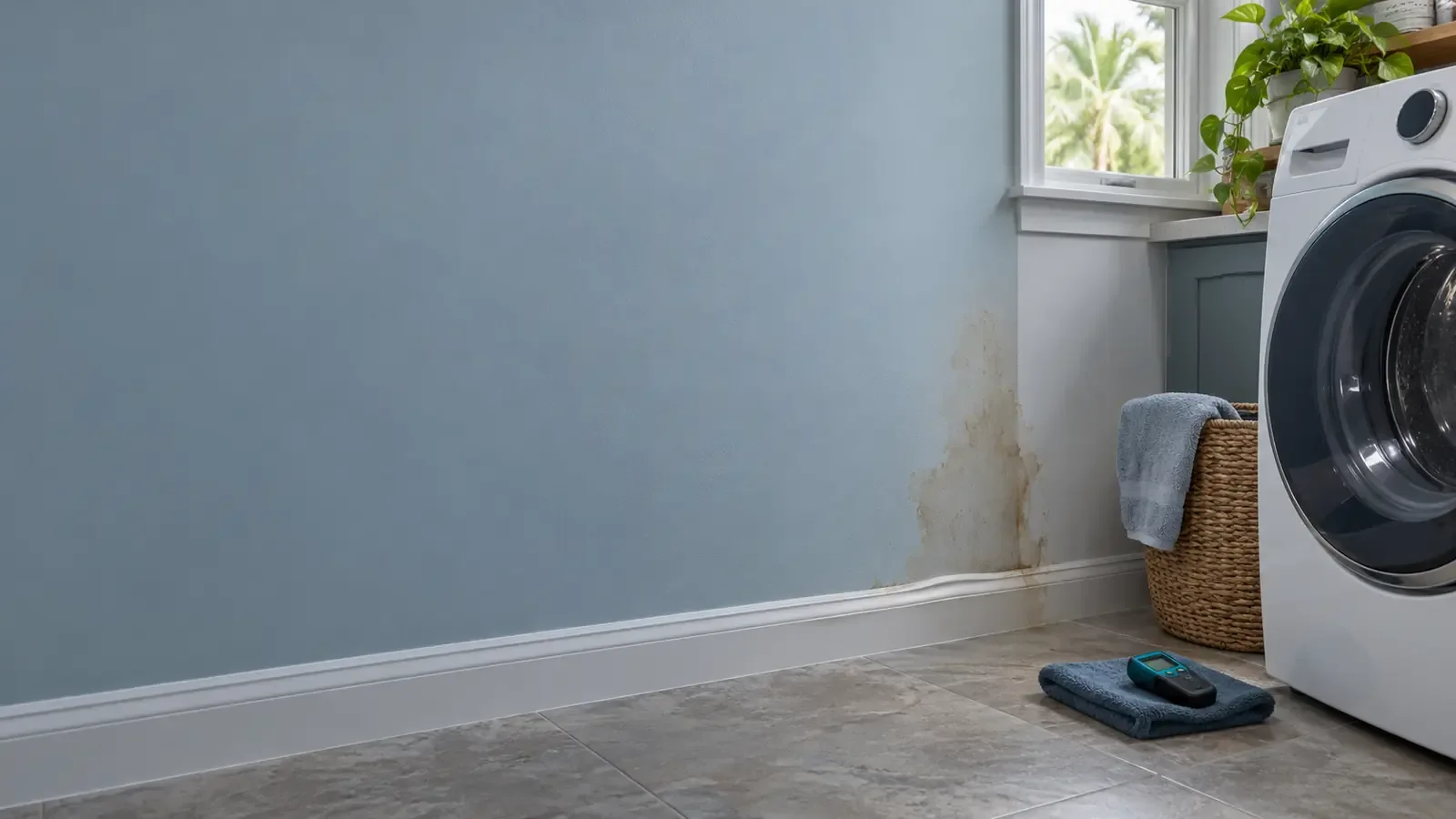
Signs of Water Damage and Possible Mold in Walls and Ceilings
Look for changes around the affected area and nearby surfaces you can safely observe.
| What you notice | What to tell the assessor |
|---|---|
| Visible growth or new spotting | Where it appeared and whether it has spread or returned after cleanup. |
| Yellow, brown or dark staining | Whether the stain is new, changing or returning after repair or repainting. |
| Peeling paint or separating wallpaper | Which wall or ceiling was affected by the leak. |
| Swollen baseboards, cabinets or flooring | When you noticed the change and whether the area still feels damp. |
| Damp patches or recurring condensation | Where they occur and whether they change after rain or AC use. |
A water stain or damaged finish alone does not confirm mold. These observations help identify areas that need evaluation.
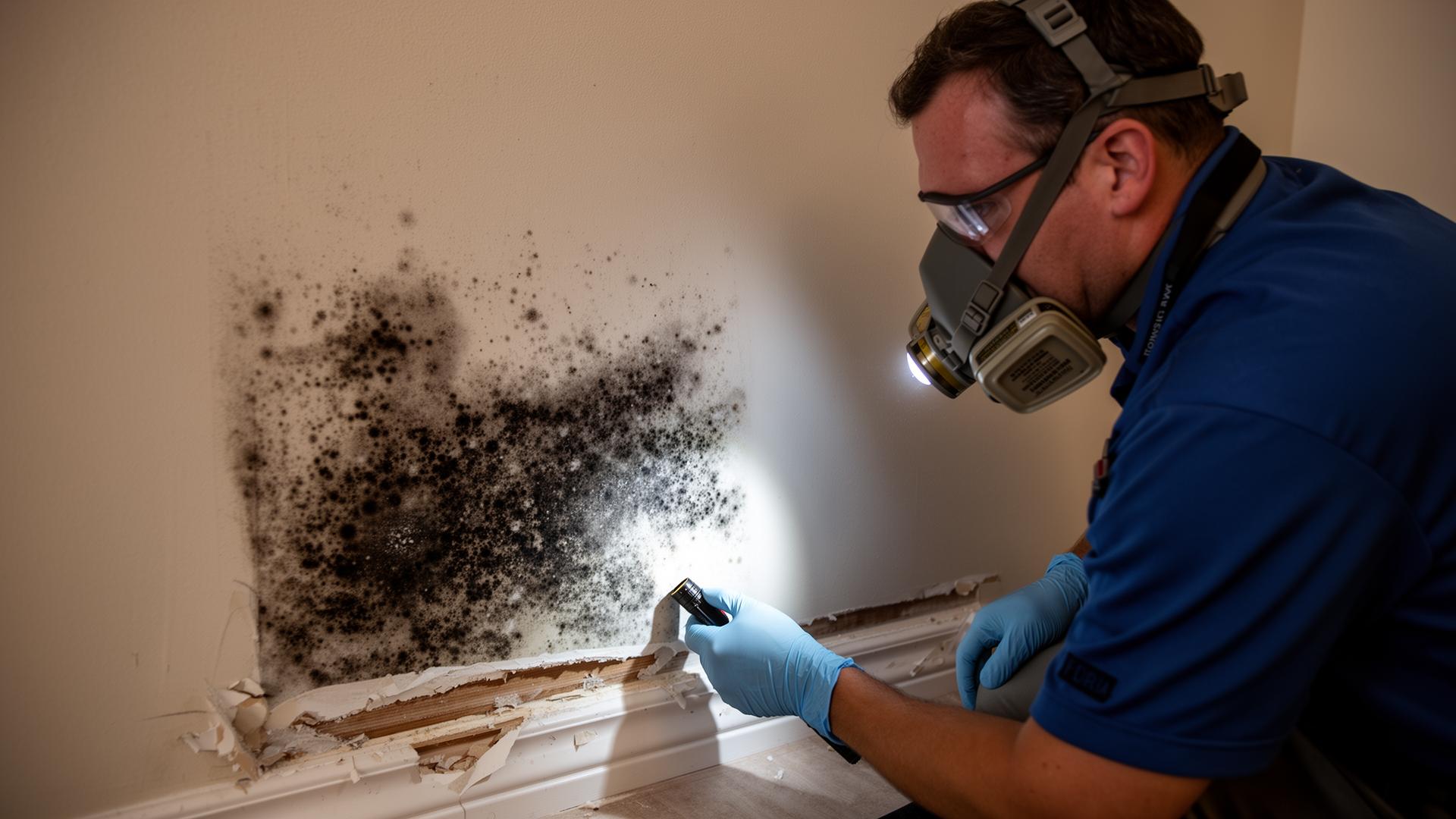
Visible mold is a reason to arrange assessment and testing. The assessment helps document the affected areas, evaluate moisture concerns and prepare a remediation protocol.
If a ceiling is sagging or appears unstable, stay clear of the affected area and arrange appropriate professional help.
What If You Smell Mold After a Leak but Cannot See It?
A persistent musty odor after water damage is a reason to investigate, particularly when it is strongest near the affected room, cabinet or wall.
Tell us where you notice the smell, when it started and whether it changes after rain, cleanup or AC use. An odor alone does not identify the source or establish the extent of a mold problem.
The EPA notes that mold can be concealed behind drywall or wallpaper and beneath other materials. Investigating it may require an experienced professional. EPA: Hidden Mold.
Avoid pulling away wallpaper or opening walls simply to investigate a smell; disturbing concealed growth can release spores. We discuss any additional access or investigation before it proceeds.
For other situations involving hidden growth, see mold concerns without visible growth.
How Soon Can Mold Grow After Water Damage?
Act promptly when materials become wet. The EPA recommends drying water-damaged areas and items within 24–48 hours to help prevent mold growth. EPA: Mold, Moisture and Your Home.
That is a prevention window, not proof that every leak produces mold at a fixed hour. The condition of the materials and whether moisture remains matter.
You also do not need to wait five or seven days before asking for an assessment. Contact us sooner if you see growth, notice a persistent odor, find recurring stains or are unsure whether concealed areas dried.
Where Should You Look After a Plumbing, Roof or AC Leak?
Start with the known leak area and nearby surfaces you can safely observe. Take photos and note the date rather than moving damaged materials or opening concealed spaces.
- Plumbing leak: Note staining, swelling or dampness around the fixture, inside accessible cabinets, along baseboards and on the ceiling below an upstairs leak.
- Roof or rain leak: Note affected ceilings, upper walls and window areas. Tell us which rooms showed changes during or after rain.
- AC-related leak: Note water damage around the equipment location and nearby walls or flooring. An HVAC specialist handles equipment repairs; we can assess the resulting moisture and mold concerns within the agreed scope.
Do not assume that an apparently dry surface establishes the condition of everything behind it. Share any drying records or previous moisture readings with the assessor.
What Does a Mold Assessment After a Leak Include?
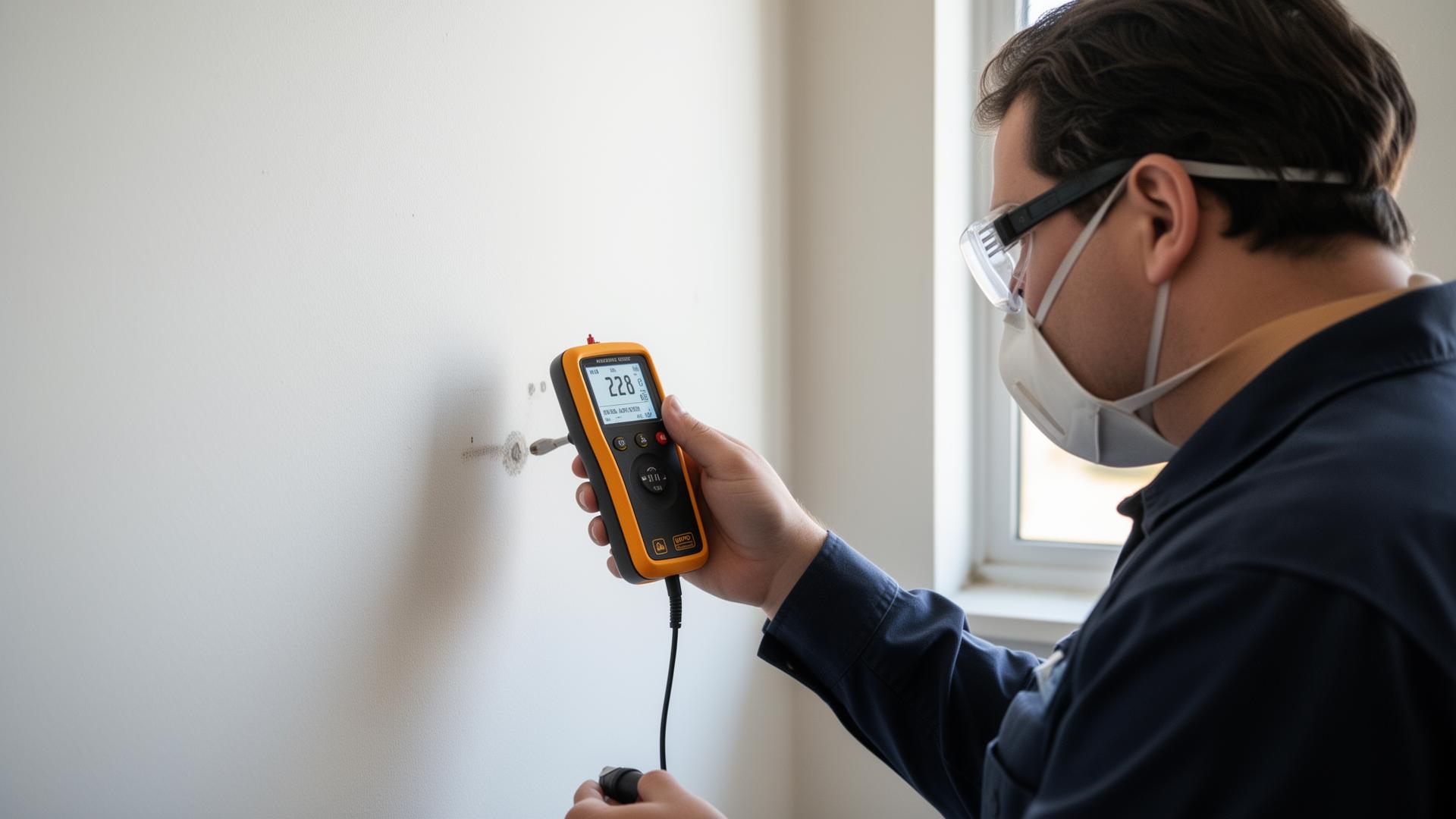
We begin with the history of the leak and the areas you want evaluated. Before the visit, we confirm the access arrangements, sampling scope and price.
The assessment includes:
- Visual evaluation of accessible areas within the agreed scope.
- Moisture meter readings in areas of concern.
- Both air and swab sampling with laboratory analysis.
- A full assessment report and written remediation protocol.
The protocol guides the recommended cleanup or removal work for the documented conditions. You can share it with the remediation company you choose.
Miami Mold Assessment provides assessment, inspection, testing and clearance only. Another contractor performs any remediation; Miami Mold Authority is our parent company.
See mold assessment and testing in Miami for the service details, or read what a mold assessment report includes.
Frequently Asked Questions
Should I wait until I see mold after a leak?
No. You can contact us about damp materials, a persistent musty smell, recurring stains or uncertainty about concealed areas before growth becomes visible. Describe the water event and the work already completed so we can discuss the appropriate scope.
My leak was repaired quickly. Should I still discuss an assessment?
Yes, especially if you are unsure what became wet or how it dried. Share the repair and drying history, along with any remaining stains, odors or material damage. We can help you discuss whether an assessment would answer the unresolved questions.
Can a small leak cause mold problems?
Yes. A slow or recurring leak can keep materials damp even when little water is visible. Tell us how long it may have been occurring and whether previous staining or cleanup has returned.
Is testing useful when I can already see mold?
We recommend an assessment that includes testing, documentation and a remediation protocol. Visible growth helps identify a concern; the assessment brings together the observations, moisture readings and sample results to guide the next steps.
Will homeowners insurance pay for the assessment?
Ask your insurer whether the assessment is covered under your policy and claim. We provide documentation you can submit, including the report, laboratory results, protocol, photos and itemized billing as applicable.
You pay Miami Mold Assessment directly and handle the claim with your insurer. Read more about mold and homeowners insurance.
How long will the assessment and report take?
A typical three-sample residential assessment takes 30–60 minutes on site. Laboratory results and the completed report usually return within 24–48 hours after the visit. Larger properties and commercial scopes receive a property-specific scheduling estimate.
Trusted Resources
Related Guides
Discuss Your Mold Concern After a Leak
Tell us what happened, which rooms were affected and what repair or drying work has been completed. We serve homes and commercial properties throughout Miami-Dade.
Residential assessments start at $389 with three samples included, including an outdoor comparison sample. The package includes both air and swab sampling, visual assessment, moisture readings in areas of concern, laboratory analysis, a full report and a remediation protocol. Additional samples are $75 each.
Commercial properties and multi-unit projects receive a property-specific quote. We confirm the scope and price before the visit. Payment is due upon arrival, and credit cards are accepted.