
Miami-Dade property guide
How Mold Affects Indoor Air Quality
Learn what mold spores in the air mean, how moisture contributes to the problem, and what a professional mold assessment can tell you.
On This Page
Quick Answer
Mold growing indoors can release spores and other particles into the air. A persistent musty odor, visible growth, recurring moisture or previous water damage is a reason to discuss an assessment.
Air sampling provides information about the air collected at a particular place and time. Its results need to be considered alongside the property history, visual findings and moisture readings.
Miami Mold Assessment combines those findings with laboratory analysis, a full report and a written remediation protocol. Addressing affected materials and the moisture source is central to resolving the property concern.
Are Mold Spores Always in the Air?
Mold occurs indoors and outdoors. Spores can enter a building through openings, ventilation and on items brought inside.
Finding spores in an air sample does not, on its own, establish an indoor growth problem. The question is how the result fits the conditions in the areas evaluated.
The CDC explains that mold can enter homes from outdoors and grow when it encounters sufficient moisture on suitable materials. CDC: About Mold.
An assessment considers the sampling locations, outdoor comparison, moisture history and accessible surfaces together. It should explain what was found and what remains uncertain.
How Can Mold Affect Indoor Air Quality?
Growth on damp building materials can contribute particles to indoor air. A musty smell can also signal a concern that needs investigation, including when the source is concealed.
Tell the assessor where you notice odors, whether there has been a leak and whether the concern changes when the AC runs or after rain. Those observations help define the investigation; they do not identify a source by themselves.
What about health symptoms?
The CDC reports that damp and moldy environments can cause allergic or respiratory effects in some people, while others may have no effects. People with asthma, mold allergies, weakened immune systems or chronic lung conditions may be more vulnerable. CDC: Possible Health Effects.
Discuss symptoms with a healthcare professional. A property assessment cannot diagnose an illness, prove the cause of symptoms or certify that a space is suitable for every person.
How Do Humidity and AC Problems Contribute?
Mold growth needs moisture. Leaks, condensation, damp materials and persistently elevated humidity can create conditions that deserve attention.
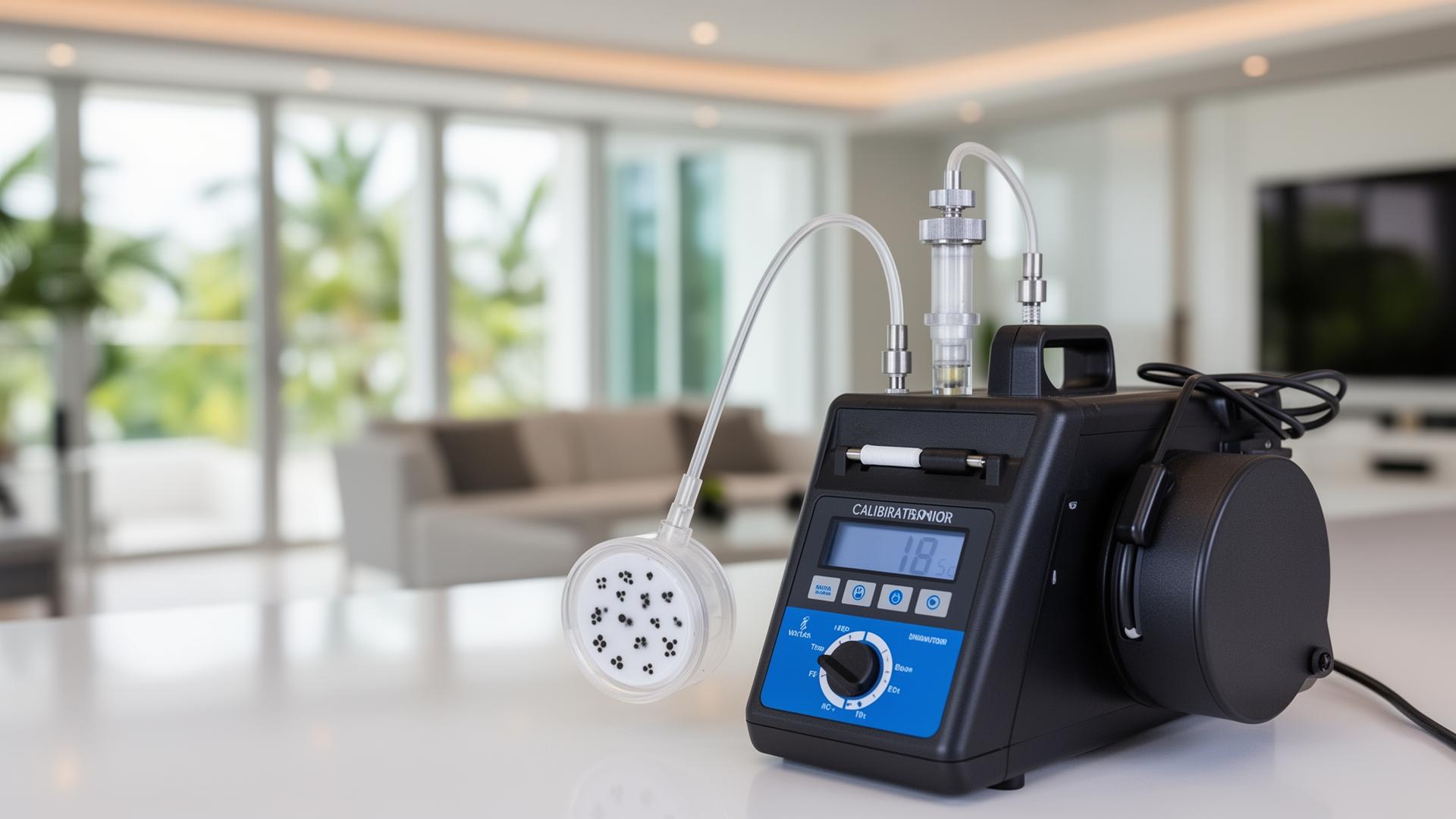
The CDC recommends keeping indoor humidity no higher than 50%, repairing leaks and using exhaust fans that vent outdoors. A humidity meter can help you notice patterns and discuss them with the appropriate professional. CDC: Mold Prevention.
Does running the air conditioner help?
An air conditioner can help manage humidity when it is functioning properly. If you notice water near the equipment, recurring condensation or persistent humidity, have an HVAC specialist evaluate the system.
Miami Mold Assessment can assess and document resulting property concerns within the agreed scope. We do not repair AC equipment or clean inside HVAC systems or ducts.
Share any HVAC service records, leak repairs or drying documentation during the assessment.
What Does Indoor Air Quality Testing for Mold Tell You?
Mold air sampling collects material for laboratory analysis. It adds information to the assessment rather than replacing inspection and moisture evaluation.
| Part of the assessment | What it contributes |
|---|---|
| Property history and visual evaluation | Context about leaks, odors, accessible growth and previous work. |
| Moisture meter readings | Information about moisture conditions in areas of concern. |
| Air samples and an outdoor comparison | Information about airborne mold in the locations and conditions sampled. |
| Swab samples | Information about material collected from the sampled surface. |
| Report and remediation protocol | An explanation of the findings, limitations and recommended work. |
A result does not map every concealed cavity or explain every indoor-air concern. The CDC notes that there are no established standards for an acceptable quantity of each mold type in a home and that sampling cannot predict whether someone will become sick. CDC: Home Testing.
For the collection process, see how mold testing is done. For the written findings, see what a mold assessment report includes.
Can Air Purifiers Remove Mold Spores?
An appropriate particle filter may capture some airborne mold particles, but it does not repair a leak or remove growth from building materials. Filtration supports source control; it does not replace it.
The EPA recommends choosing a portable air cleaner with a clean air delivery rate appropriate for the room and maintaining its filters. For an HVAC filter upgrade, consult an HVAC professional about what the system can accommodate.
The EPA also advises against devices that intentionally produce ozone, which can irritate the lungs. EPA: Guide to Air Cleaners in the Home.
A reduced odor or a running purifier is not confirmation that the underlying mold and moisture concern has been resolved.
How Can You Improve Indoor Air Quality After Mold?
Start with the condition causing the concern and agree on a plan for the affected areas.
Address the moisture source
Arrange the appropriate plumbing, roofing or HVAC repair. You can call us while arranging that work; active water intrusion needs to be controlled before remediation proceeds.
Promptly drying wet materials is important. Do not delay necessary water control while waiting for a sampling appointment.
Use the assessment to guide the work
Share the findings and written remediation protocol with the remediation company you choose. Confirm the affected materials, containment, cleanup and agreed scope before work begins.
Miami Mold Assessment provides assessment, inspection, testing and clearance only. Another contractor performs any remediation; Miami Mold Authority is our parent company.
Keep records and discuss any follow-up assessment
Retain the assessment report, work documentation and invoices. Report recurring dampness, odors or visible growth instead of assuming the original source has stayed resolved.
Post-remediation clearance testing is a separate service when requested by the homeowner or insurance company. We provide separately booked clearance after another remediation contractor completes its work. A passing result is not guaranteed.
Read what a mold assessment report includes for the work sequence.
Frequently Asked Questions
Can you smell mold in indoor air?
Mold can produce a musty smell, but odor alone does not establish the source, amount or extent of growth. Describe where and when you notice it. A concern can also exist without an obvious smell.
For concealed conditions, see mold without visible growth.
Does a reassuring air-sample result rule out hidden mold?
No single air sample rules out every concealed condition. Results describe the locations and conditions sampled and should be interpreted with the other findings. Share persistent odors, recurring moisture or previous water damage even if an earlier result did not identify a concern.
Is mold testing the same as a complete indoor air quality test?
No. Our mold assessment focuses on mold and moisture concerns. It does not measure every possible gas, chemical or airborne pollutant.
Tell us what you need investigated before booking so we can confirm whether the requested evaluation is within our service scope.
How often should I arrange mold air testing?
Base the decision on the property’s conditions and the question you need answered. Visible mold, a persistent musty odor, recurring dampness or a water-damage history are reasons to discuss an assessment.
We confirm the areas of concern and sampling plan before the visit. There is no single testing schedule that fits every property.
How long do the assessment and report take?
A typical three-sample residential assessment takes 30–60 minutes on site. Laboratory results and the completed report usually return within 24–48 hours after the visit. Larger properties and commercial projects receive a property-specific scheduling estimate.
Trusted Resources
Related Guides
Discuss Your Mold and Indoor Air Concern
Tell us about the odors, moisture, visible growth or previous water damage you want evaluated. We serve residential and commercial properties throughout Miami-Dade.
Residential assessments start at $389 with three samples included, including an outdoor comparison sample. The package includes visual assessment, moisture meter readings in areas of concern, both air and swab sampling, laboratory analysis, a full report and a remediation protocol. Additional samples are $75 each.
Commercial properties and multi-unit projects receive a property-specific quote. We confirm the scope and price before the visit, with payment due upon arrival.